MDF vs plywood for built-in wardrobes in Dubai
Most built-in wardrobes here should use both boards. Plywood for the carcass, plinth and any panel that carries hinges, because screws keep their grip through the humidity cycle. MDF for doors and sprayed faces, because it stays flat and takes a tight finish. Which board goes where depends on the wall the wardrobe stands against.
What a built-in wardrobe is actually made of
Four parts, and each behaves differently.
The carcass is the sides, top, base, dividers and shelves. It carries the clothes and hangs the doors. The doors are the face you touch. The back panel closes the unit and sits against a wall you never see. The plinth is the 60 to 100mm strip at the floor, and it is the closest part of the wardrobe to a mop and bucket.
When a customer asks MDF or plywood, they are usually asking about one of those parts and being answered about another. A quote that says 18mm board without naming the part is not a specification.
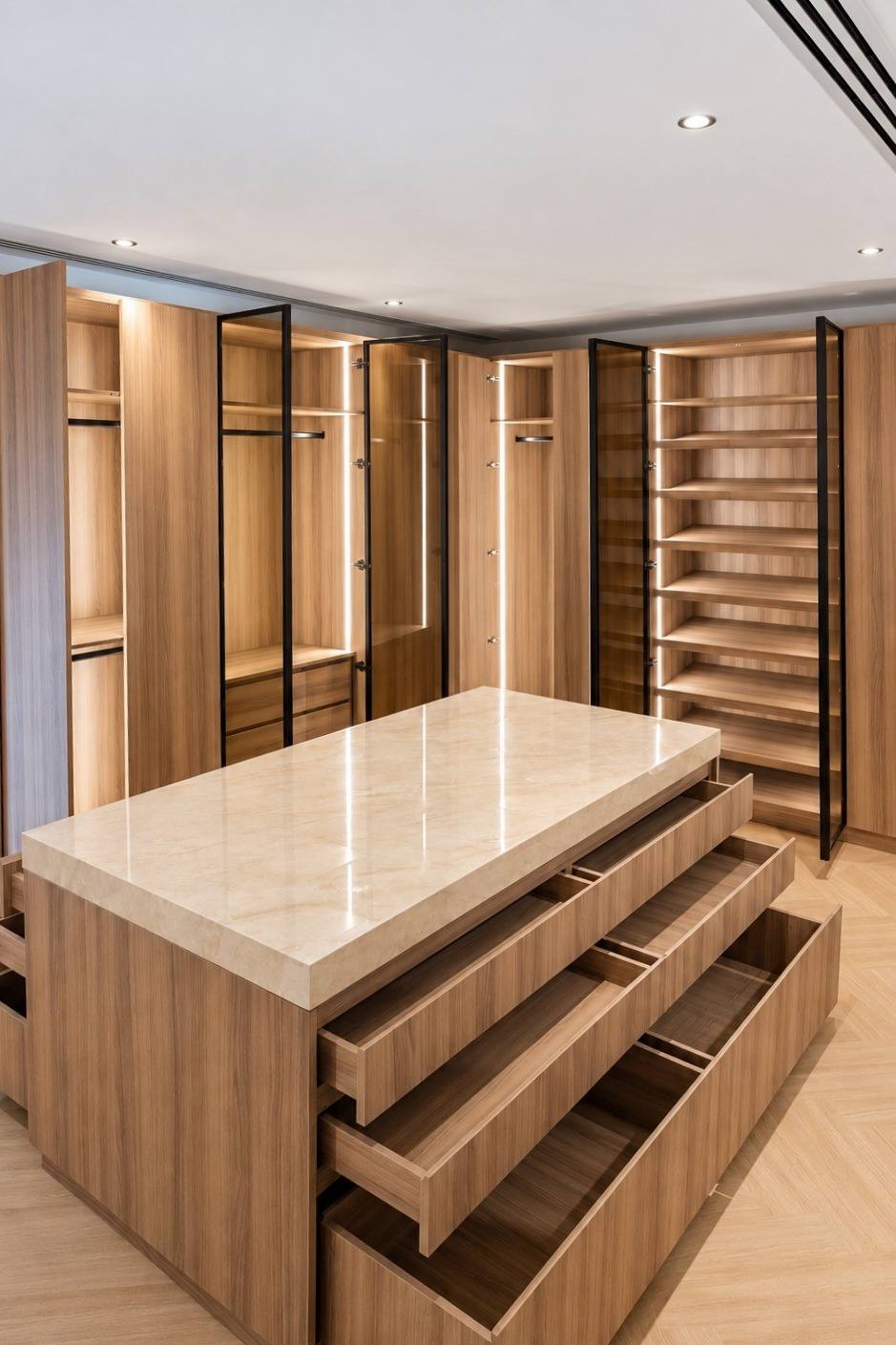
The walk-in in the photo above shows why the detail matters. Light wood veneer fronts, LED strip lighting set into the shelves, an island with pull-out drawers under a marble top. That finish only survives if the carcass has not twisted and the doors still line up after two summers. Our own quotes for bespoke joinery in Dubai name the board part by part, because that is the only way the number means anything.
Where MDF wins
MDF is uniform. No core voids, no knots, no grain that lifts through a painted face after a hot season.
Cut edges machine clean, and that matters on a full-height flush door with a shadow gap. Tall doors, handleless fronts, curved panels and anything sprayed or lacquered belong in MDF. The board stays flat across a 600mm door width and stays flat after four months of air conditioning.
The weaknesses are water at raw edges and screw threads. An unsealed bottom edge on a door swells and never returns. A hinge screwed into MDF, removed and refitted twice, strips.
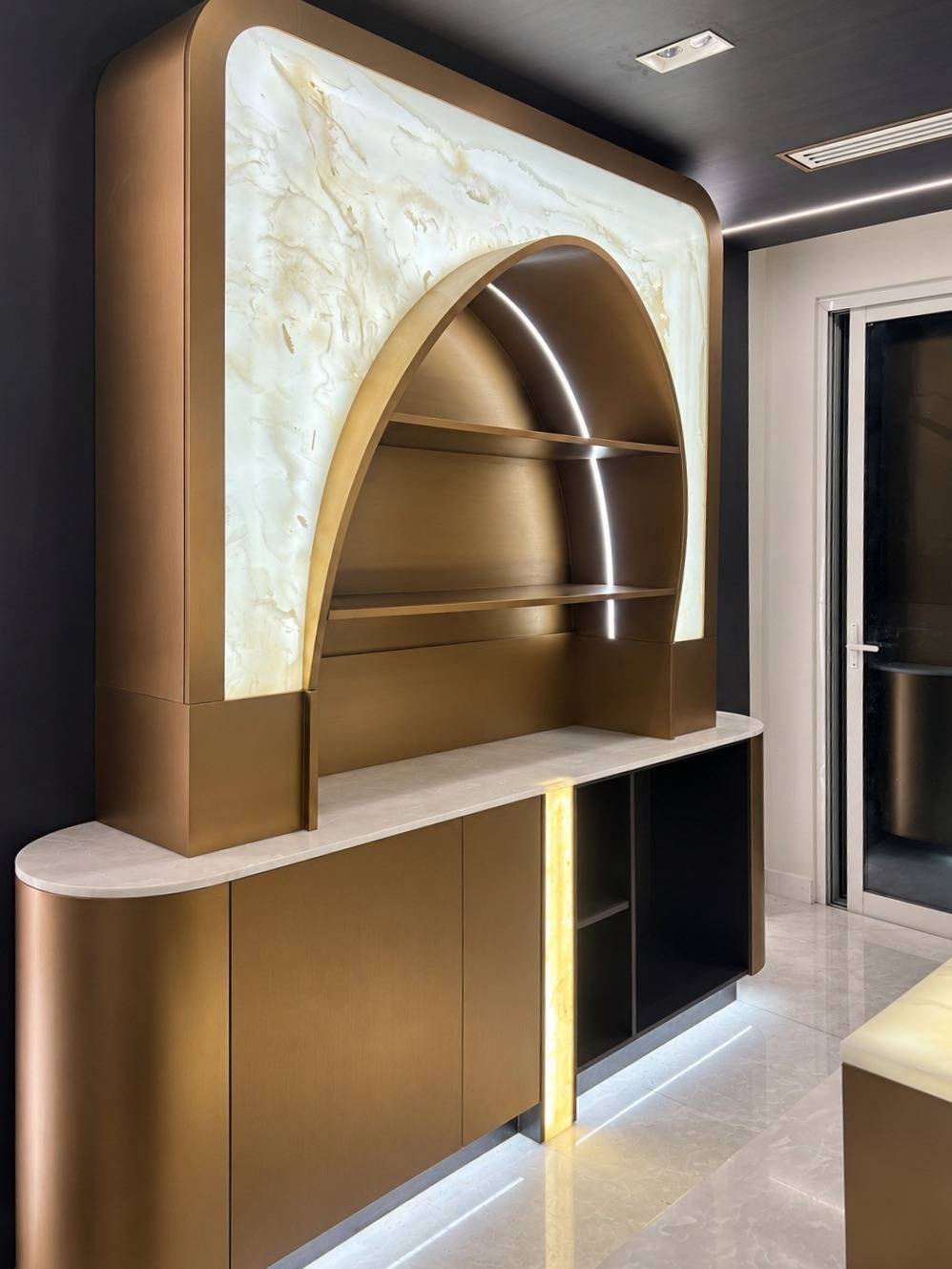 Sprayed and backlit joinery like this is where MDF, or veneer over MDF, does work plywood cannot match on the visible face.
Where plywood wins
Plywood has layers and a grain direction. Screws bite and hold, hinges stay put, and a panel that takes a knock can be re-screwed slightly over and still hold.
It earns its place in the carcass sides that carry hinge plates, shelf spans beyond roughly 900mm, the plinth, and the back panel on any wall with plumbing or ducting behind it. A plywood carcass also survives the thing nobody plans for: a slow leak inside a wall that runs for weeks before anyone notices.
On a wall shared with a bathroom, specify a moisture resistant grade and seal every cut edge. Vapour crosses plasterboard. It does not care about the tiles on the far side.
What actually fails in a Dubai wardrobe
Ranked by how often we see it:
- Swelling along the bottom of the back panel and the plinth, usually on ground floors or walls shared with an en-suite.
- Doors dropping at the outer corner on a run wider than 900mm, because the hinge has moved in the board rather than failed.
- Hinges pulling out of a soft core after a refit or one hard slam.
- Water damage under an AC bulkhead, where the condensate drain runs inside the wall.
None of those are brand problems. They are board choice and detailing problems. A sealed plinth on adjustable feet, a ventilated gap behind the back panel on a wet wall, and hinge plates fixed into plywood prevent most of them. A wardrobe pushed tight against a balcony wall that takes direct afternoon sun will move more than one on an internal partition, so leave the clearance the board manufacturer asks for.
Mixing boards, and what to put in writing
Mixing is standard practice, not a compromise. Plywood carcass and plinth, MDF doors, plywood shelves on long spans, MDF for anything sprayed. It is how a fitted wardrobe in a Dubai apartment usually gets specified once the walls have been looked at.
On cost, the honest framing is relative. A plywood carcass costs more than an MDF carcass and the gap widens with the grade. Put the money into the parts that fail, which are the carcass, the plinth and the back panel. Do not put it into internal shelving nobody sees, and do not save it on the panels that carry the hinges. Door faces are where money shows in a photograph. The carcass is where it shows in year five.
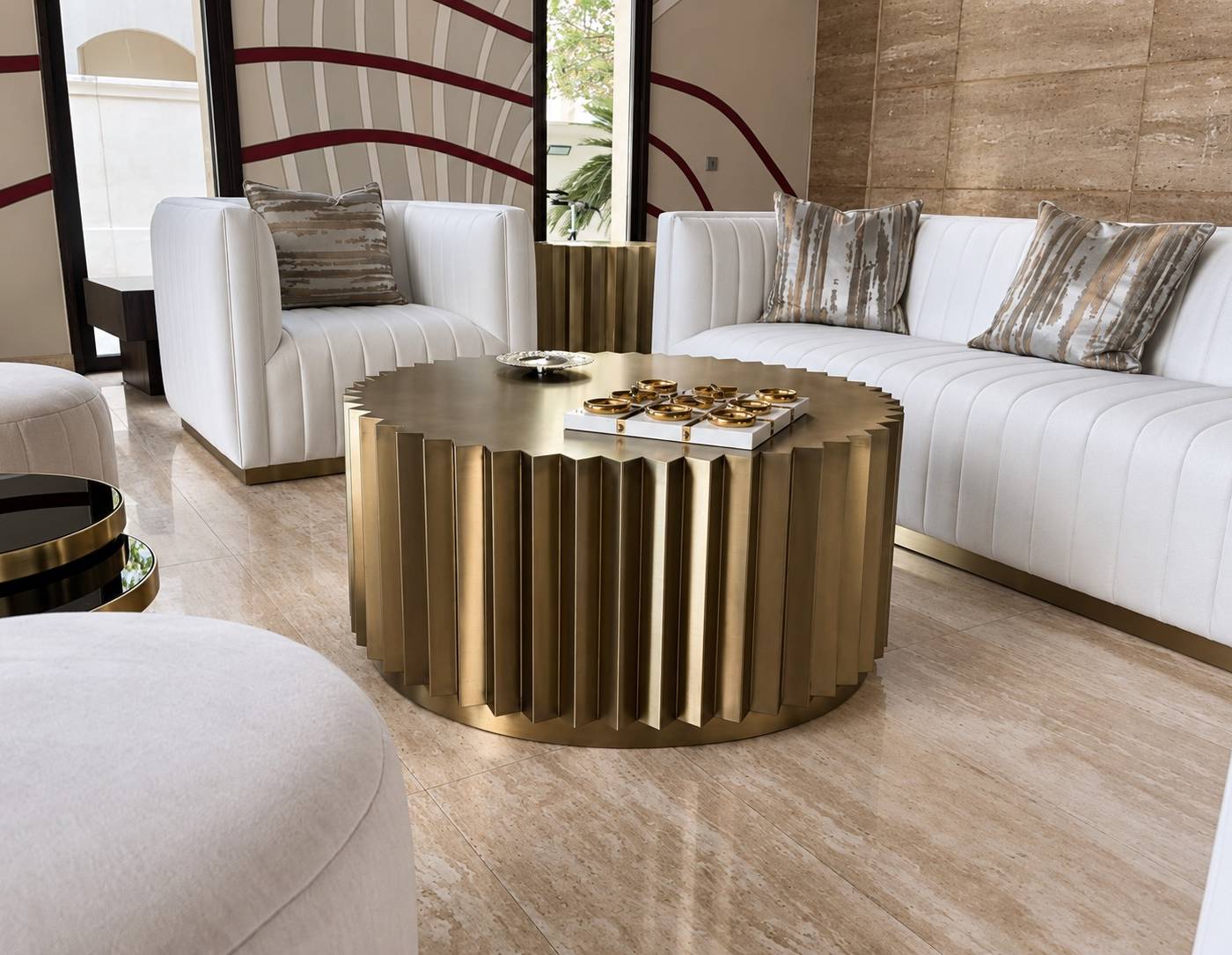 A wardrobe rarely sits alone in a fit-out. The same carcass and face decisions carry into the room next door.
Get these in writing before you sign:
- Board type and brand for carcass, doors and back panel, named separately.
- Thickness: 18mm carcass, 8mm back, and the door thickness.
- Edge banding: 2mm PVC applied by machine, not 0.5mm iron-on tape.
- Moisture resistant grade for anything within a metre of a wet wall or on a ground floor.
- Hinge brand and type, and whether the hinge plates land in plywood or MDF.
- Plinth height, material, and whether it is sealed or ventilated.
A quote that lists a thickness and nothing else has not told you what you are buying. If you are still weighing layout or finish, there are more joinery and fit-out guides on the site.
For a quote on your own wardrobe, send photos of all four walls, the ceiling height, the floor, the AC ducting or bulkhead, and any bathroom or balcony door on the other side of that wall. Add width, height and depth in millimetres, your building and area, and say whether the wall is shared. WhatsApp is the fastest way to get it looked at, on +971 555 763 154, or send us your wardrobe dimensions for a written quote through the site.